
Shielding Your Mental Health from Market Volatility
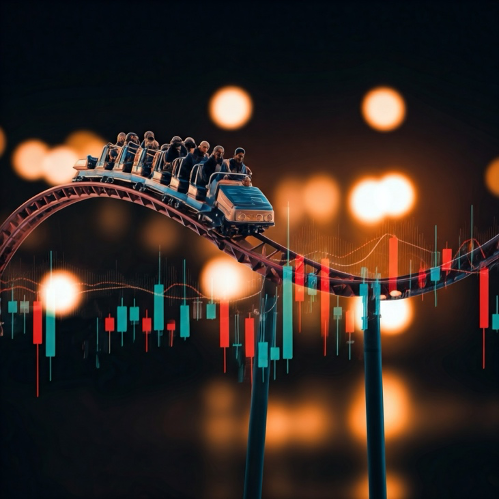
Since you are reading this article in Optima Asset Management’s website, it is very likely that you have interest in the stock market. You may even already be investing in stocks. If so, you probably have experienced the highs and the lows that result from such investments. The volatility in the stock market can result in an emotional rollercoaster for the investors.
In a research that looked into the effects of daily stock returns on mental health of investors in California, Engelberg and Parsons (2016) find a strong inverse relationship between the two variables. They find that one standard deviation drop in stock market corresponded to 21.4 basis points increase in hospitalizations for mental health conditions. If the stock returns decline severely (bottom quantile), such hospitalizations increased by 57 basis points. Others like Catalano and Hartig (2004), McInerney, Mellor and Nicholas (2013), Cotti and Simon (2017), Schwandt (2018), and Giullietti, Tonin and Vlassopoulos (2020) have found similar associations.
At the same time, it has been found that fear among investors can lead to higher volatility, which in turn can, again, result in more emotional distress. Thus, there is a two-sided relationship between volatility and investor psyche.
So how do we make sure that we shield ourselves from the mental health effects of stock market volatility? Here are a few useful ways of doing so:
- Focus on Long-Term Goals.
Clearly define your investment objectives. For instance, your objectives may be retirement, buying property or funding your children’s higher education. Develop a financial plan around that objective and stick to it. In doing so, make sure you pick stocks that are fundamentally sound and have good corporate governance. At Optima, we have the mantra of investing in good companies run by decent people. However, focusing on long-term goals does not mean that you become a passive investor. Rebalance your portfolio as needed but avoid reacting emotionally to daily market movements since you are playing a long game. Avoid checking your portfolio too frequently, especially during periods of heightened volatility
- Diversify your portfolio.
Make sure that your portfolio is diversified. Study the correlations among the different sectors and asset types in your portfolio. Diversification can be done across sectors, geographies, and asset classes. Did you know that hydro companies with projects in certain geographies were less affected by recent monsoons-induced floods than those in other parts of the country? Thus, even if you are fond of one particular sector, it is possible to diversify within it based on other categories such as geography, capitalization and strategies employed by companies.
- Maintain a cash/near-cash reserve.
Having cash on hand provides a safety net during market downturns and allows you to take advantage of buying opportunities when prices are low. Allocate a portion of your portfolio to low-risk, liquid assets like savings accounts or money market funds. Operating with no breathing room can cause anxiety. Avoid over-investing to the point where you lack liquidity for emergencies.
- Averaging strategy.
Investing some amount of money into stocks at different price points. This strategy is commonly used in stock market investments, mutual funds, and exchange-traded funds (ETFs). You will reduce the impact of price fluctuations on your portfolio.
Here is an example of how you can implement this. Let’s assume, you want to buy around 2000 units of RURU stocks because you believe that it is one of those good companies run by competent management. You can invest NPR 200,000 in that stock every second Sunday. If the price is high, you buy fewer shares; if it’s low, you buy more. Over time, your cost per share averages out, reducing the risk of making a large investment at the wrong time.
- Stay educated but limit media consumption.
It is important to follow news that affect your portfolio. Events in economy, politics or companies you have invested in often determine the movement of the market, and your stocks. Media “sells” news and/or opinions. In order to lure readers, they tend to sensationalize and sometimes entirely make up stories. Knowledge helps you make informed decisions, but overexposure to sensational headlines can cause unnecessary stress and impulsive reactions. You need to be a critical thinker and assess the utility of your information intake. Read credible and balanced sources of market news.